Trail Guide to World Geography: A Comprehensive Overview
Trail Guide to World Geography is a robust teacher’s manual, offering 36 weeks of structured lesson plans designed for diverse learners and grade levels.
This curriculum features daily drills, reproducible maps, and engaging explorations of global landmarks, fostering a comprehensive understanding of world geography.
Trail Guide to World Geography emerges as a meticulously crafted resource, designed to transform geography education into an engaging and accessible adventure. This isn’t merely a textbook; it’s a comprehensive teacher’s manual, providing a structured, year-long curriculum spanning 36 weeks of detailed lesson plans.
The core philosophy centers around consistent, daily engagement through “Geography Trails” – quick drills that encourage students to utilize atlases and build foundational knowledge. Beyond these drills, the guide incorporates “Guide Maps” and “Points of Interest,” fostering a deeper understanding of global locations and landmarks.
Furthermore, the curriculum cleverly integrates literature, specifically “Around the World in 80 Days,” to contextualize geographical learning within a captivating narrative. This holistic approach aims to cultivate not just memorization, but a genuine appreciation for the world’s diverse cultures and landscapes. It’s a tool built for flexibility and lasting impact.
What is “Trail Guide to World Geography”?
Trail Guide to World Geography is fundamentally a teacher’s manual, meticulously designed to deliver a complete and engaging geography curriculum. It’s not a student textbook, but rather a resource for educators, providing the tools and structure needed to effectively teach world geography across multiple grade levels.
The curriculum is built around three key components: daily “Geography Trails” (drills), detailed “Guide Maps,” and explorations of significant “Points of Interest” globally. Over 70 pages are dedicated to Geography Trail questions, complete with answer spaces, and it includes 70 reproducible maps for weekly assignments.
Moreover, it offers 270 formatted templates, providing ample space for students to record written summaries, incorporate pictures, and create drawings. It also supports student-led creation of crosswords, charts, and reports, fostering active learning and deeper comprehension of geographical concepts.
Target Audience & Grade Levels
Trail Guide to World Geography is remarkably versatile, catering to a broad spectrum of learners across elementary through high school. Its structure incorporates a unique “Three Trail System” designed for differentiated instruction and multi-year use.
Specifically, “Trail 1” is geared towards students in grades 2-4, “Trail 2” for grades 5-7, and “Trail 3” is designed for students in grades 8 through high school. This tiered approach allows the same curriculum to be utilized effectively with three different students simultaneously, or over three consecutive years with a single student.
The curriculum’s adaptability makes it suitable for homeschool environments, traditional classroom settings, and supplemental learning. The varying difficulty levels within the trails ensure that students are consistently challenged at an appropriate pace, fostering a solid foundation in geographical knowledge.
Core Components of the Curriculum
Trail Guide to World Geography centers around “Geography Trails” (daily drills), “Guide Maps”, “Points of Interest”, and a literature unit utilizing Around the World in 80 Days.
Geography Trails: Daily Drills
Geography Trails form the cornerstone of daily learning within Trail Guide to World Geography. These consist of concise, focused drills designed to reinforce geographical knowledge across three distinct trail levels.
Students actively utilize their atlases to locate and record answers to the day’s specific drill question, promoting independent research and map-reading skills. This consistent practice builds a strong foundation in identifying countries, capitals, geographical features, and other essential elements.
The drills are structured to be manageable and engaging, ensuring students remain actively involved in the learning process. Over 70 pages are dedicated to these questions, providing ample opportunity for repeated practice and mastery. The format encourages quick recall and strengthens geographical literacy, preparing students for more complex mapping assignments and explorations.
These daily exercises are a fundamental component, establishing a routine of geographical inquiry.
Guide Maps: Trail 3 & 5 Explained
Guide Maps within Trail Guide to World Geography provide structured mapping assignments, with Trail 3 and Trail 5 representing key components of the curriculum’s progression.
These trails aren’t simply about location; they’re designed to build a deeper understanding of geographical relationships and spatial awareness. Trail 3 and Trail 5 each present a specific path, guiding students through a series of mapping exercises that progressively increase in complexity.
The curriculum includes over 70 reproducible maps directly associated with these weekly assignments, allowing for hands-on practice. These maps are integral to reinforcing concepts introduced in the daily drills, solidifying knowledge of countries, capitals, and physical features.
Understanding the path explained in Trails 3 and 5 is crucial for effective implementation of the program, ensuring a smooth and comprehensive learning experience.
Points of Interest: Exploring Global Landmarks
Points of Interest is a core section within Trail Guide to World Geography, designed to move beyond basic map skills and delve into the cultural and historical significance of locations worldwide.
This component transforms geography lessons into engaging explorations of iconic landmarks, fostering a sense of global awareness and curiosity. Students aren’t just memorizing places; they’re learning about the stories and contexts behind them.
The curriculum utilizes this section to connect geographical knowledge with real-world examples, making learning more relevant and memorable. It encourages students to research and present information about these landmarks, developing critical thinking and communication skills.
By examining these Points of Interest, students gain a richer, more nuanced understanding of the world and its diverse cultures, enhancing their overall geographical literacy.
Geography Through Literature: “Around the World in 80 Days”
Trail Guide to World Geography uniquely integrates literature with geographical study, utilizing Jules Verne’s classic, “Around the World in 80 Days”, as a central unit study.
This approach transforms learning into an immersive adventure, allowing students to experience geography through the narrative of Phileas Fogg’s journey. Students trace his route, identifying the countries and cities he visits, and learning about their geographical features.
The curriculum provides structured activities and assignments that connect the novel’s events to real-world geography, reinforcing concepts and enhancing comprehension. This literary component fosters a deeper appreciation for both geography and literature.
By exploring the world alongside Fogg, students develop a more engaging and memorable understanding of global locations and cultures, solidifying their geographical knowledge.

Utilizing the Curriculum Effectively
Trail Guide to World Geography offers a three-trail system adaptable for 2nd-4th, 5th-7th, and 8th-high school grades, ensuring long-term usability and differentiated learning.
The Three Trail System (2-4th, 5-7th, 8th-High School)
Trail Guide to World Geography’s strength lies in its adaptable three-trail system, designed to cater to varying academic levels and allow for multi-year use within a family. Each trail presents a different level of complexity in the daily “Geography Trails” drills and mapping assignments.
Trail 1 is geared towards students in grades 2-4, introducing fundamental geographical concepts with simpler questions and map work. Trail 2 challenges students in grades 5-7 with more detailed inquiries and increasingly complex mapping exercises. Finally, Trail 3 is designed for students in grades 8 through high school, demanding in-depth analysis and sophisticated map skills.
This tiered approach allows a single family to utilize the curriculum for three years consecutively, or enables three students at different grade levels to simultaneously benefit from the program. The system ensures that each learner is appropriately challenged, fostering a deeper and more meaningful understanding of world geography.
Lesson Plan Structure: 36-Week Format
Trail Guide to World Geography is meticulously organized around a comprehensive 36-week lesson plan structure, providing a complete year-long curriculum. Each week is thoughtfully designed to build upon previous knowledge, creating a cohesive and progressive learning experience.
Each lesson plan segment begins with “Geography Trails” – daily drills that encourage students to utilize their atlases and hone their geographical recall. Following the drills, students engage with “Guide Maps,” focusing on specific mapping assignments that reinforce learned concepts.
The curriculum is further enriched by “Points of Interest,” which explore significant global landmarks, and “Geography Through Literature,” a unit study centered around Jules Verne’s Around the World in 80 Days. This format allows for a balanced approach, combining factual knowledge with engaging literary exploration, ensuring a well-rounded geographical education.
Reproducible Maps & Mapping Assignments
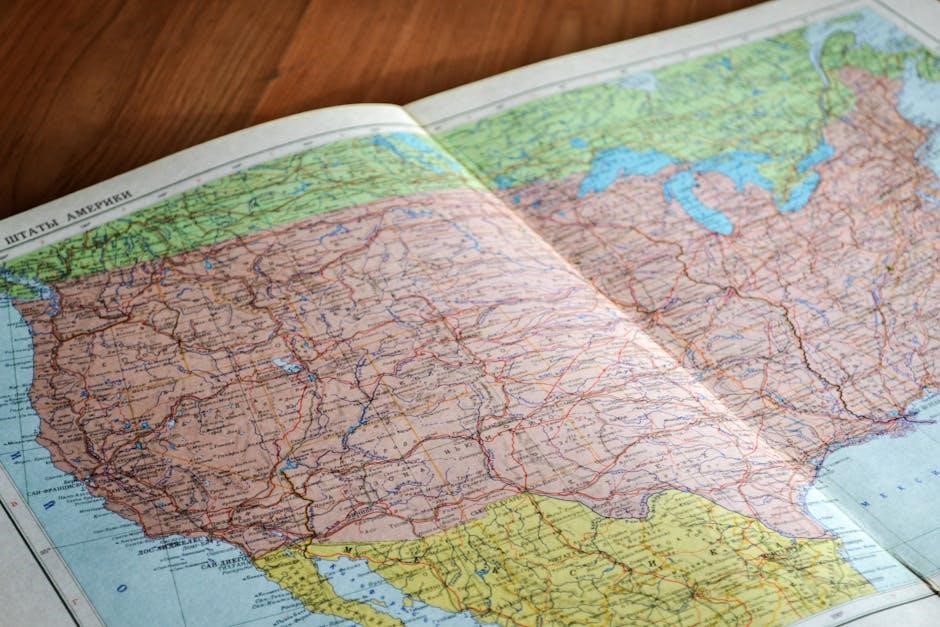
Trail Guide to World Geography heavily emphasizes hands-on learning through its extensive collection of reproducible maps and associated mapping assignments. The curriculum boasts over 70 reproducible maps, directly linked to the weekly lesson plans, providing students with ample opportunity to practice their cartographic skills.
These assignments aren’t simply about locating places; they’re designed to reinforce geographical understanding and spatial reasoning. Students actively engage with the material by labeling countries, capitals, and significant geographical features.
The inclusion of outline maps is crucial, serving as the foundation for these assignments. The curriculum suggests utilizing Uncle Josh’s Outline Map CD-ROM, though alternative mapping resources are also viable. These mapping exercises are integral to solidifying knowledge and developing a lasting understanding of world geography.
Supplemental Resources & Materials
Trail Guide to World Geography requires outline maps for mapping assignments, and suggests Uncle Josh’s CD-ROM, though alternatives exist for enriching the learning experience.
Required Resources: Outline Maps
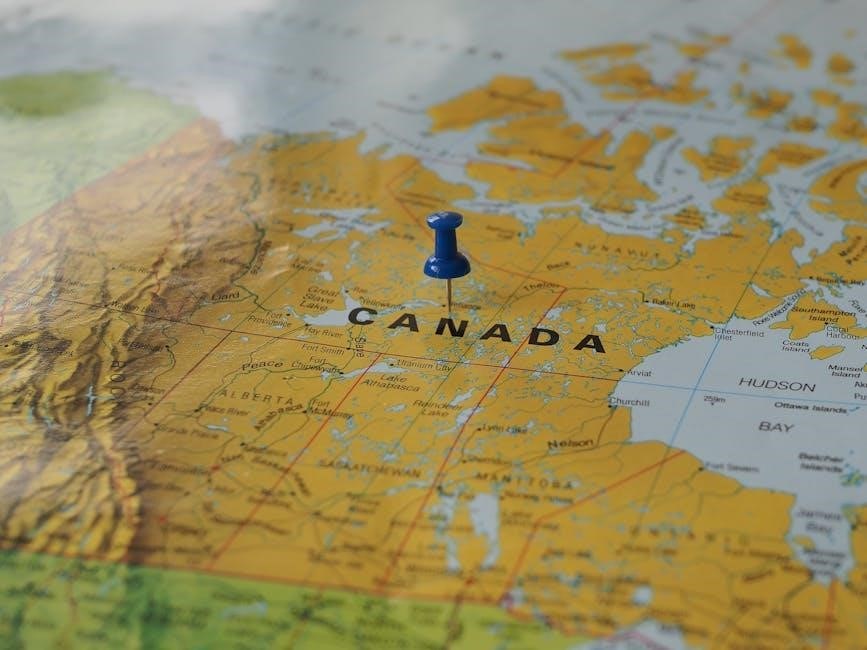
Outline maps are absolutely fundamental to effectively utilizing the Trail Guide to World Geography curriculum. The program is specifically designed around consistent mapping assignments, making these maps a non-negotiable resource. Each week incorporates dedicated mapping exercises, and the guide includes over 70 reproducible maps directly correlated to these weekly tasks.
Students actively engage with geography by locating and labeling countries, capitals, physical features, and points of interest on these blank outlines. This hands-on approach reinforces learning and builds spatial reasoning skills; The curriculum’s structure relies heavily on students’ ability to visually represent geographical information, and outline maps provide the perfect canvas for this.
Without a sufficient supply of outline maps, implementing the full scope of the Trail Guide’s mapping component becomes significantly challenging. Therefore, procuring an adequate number of outline maps is the first and most crucial step in preparing to use this geography resource.
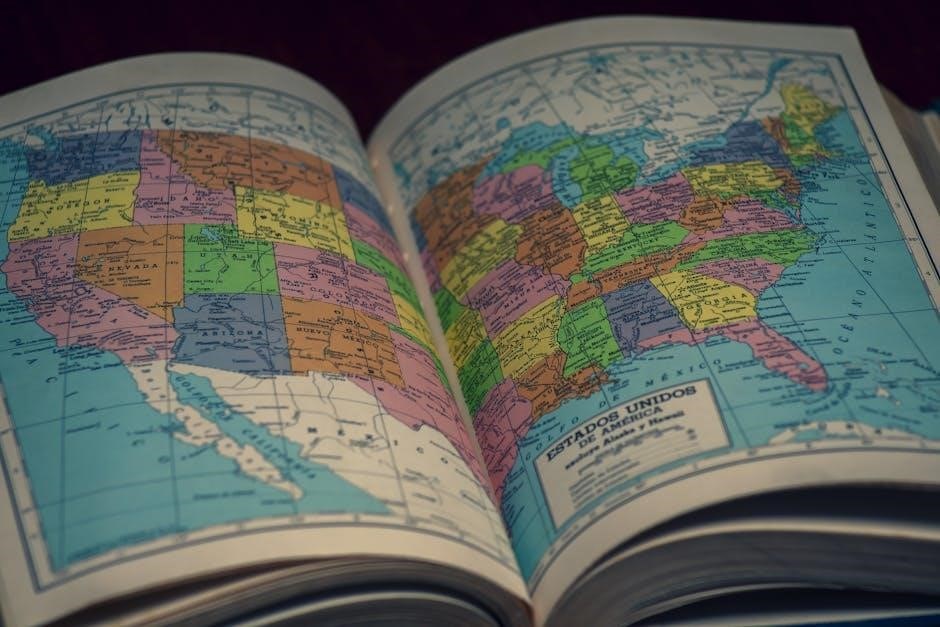
Uncle Josh’s Outline Map CD-ROM: Evaluation
Uncle Josh’s Outline Map CD-ROM is frequently suggested as a resource to accompany the Trail Guide to World Geography, offering a digital alternative to traditional paper maps; However, user experiences appear mixed, prompting consideration of alternative options.
While the CD-ROM provides a convenient source of printable maps, some users question its overall value and ease of use. The quality of the maps and the software interface are points of potential concern. Many educators actively seek “better resources” for mapping assignments, indicating that Uncle Josh’s may not be the optimal solution for everyone.
The Trail Guide’s reliance on frequent mapping necessitates a reliable and user-friendly map source. Therefore, carefully evaluating the CD-ROM’s functionality and map quality is crucial before committing to it. Exploring alternative mapping resources may prove beneficial to ensure a smooth and effective learning experience.
Alternative Mapping Resources
Given potential concerns regarding Uncle Josh’s Outline Map CD-ROM, exploring alternative mapping resources is prudent when utilizing the Trail Guide to World Geography. The curriculum’s success hinges on readily available and effective mapping tools.
Numerous options exist beyond the CD-ROM, ranging from free online resources to commercially available map books. Websites offering printable outline maps are plentiful, providing a cost-effective solution. Physical atlas options, while requiring a larger initial investment, offer a durable and comprehensive resource.
Consider the specific needs of your students and your teaching style when selecting alternatives. Factors like map clarity, ease of printing, and the availability of accompanying answer keys are important. Prioritizing resources that streamline the mapping assignments will enhance the overall learning experience and maximize the Trail Guide’s potential;

Curriculum Features & Benefits
Trail Guide to World Geography boasts formatted templates, crosswords, charts, and reports, alongside ample space for student summaries, pictures, and creative drawings.

Formatted Templates for Student Work
Trail Guide to World Geography truly shines with its extensive collection of over 270 formatted templates specifically designed to enhance student engagement and facilitate comprehensive learning. These aren’t just worksheets; they are thoughtfully crafted tools that cater to various learning styles.
Students can utilize these templates to create their own unique crosswords, reinforcing geographical terminology in a fun and interactive way. Charts are provided for data organization and comparison of countries, climates, or populations. Furthermore, the curriculum encourages detailed report writing, allowing students to synthesize information and demonstrate their understanding.
Crucially, each template includes dedicated space for written summaries, enabling students to articulate their learning in their own words. Ample room is also provided for visual learners to incorporate pictures and drawings, fostering creativity and deeper comprehension. This multi-faceted approach ensures that every student can effectively demonstrate their grasp of world geography.
Crosswords, Charts & Reports
Trail Guide to World Geography doesn’t just present information; it actively engages students through diverse activities. A key component is the inclusion of numerous templates for creating custom crosswords, a playful method for mastering geographical terms and locations. These puzzles reinforce learning through recall and problem-solving.
Beyond crosswords, the curriculum provides structured chart templates. Students can systematically compare and contrast countries based on factors like climate, population, or economic indicators, developing analytical skills. Furthermore, the program emphasizes report writing, encouraging students to synthesize information and present their findings in a clear, concise manner.
These activities aren’t isolated exercises; they are integrated into the broader curriculum, providing opportunities for students to apply their knowledge and demonstrate a thorough understanding of world geography. The variety ensures that all learning styles are catered to.
Space for Written Summaries, Pictures & Drawings
Trail Guide to World Geography recognizes that learning isn’t solely about memorization; it’s about comprehension and creative expression. The curriculum thoughtfully incorporates ample space for students to record written summaries of lessons, solidifying their understanding in their own words. This encourages active recall and personalized learning.
However, the program goes beyond text-based responses. Recognizing the power of visual learning, Trail Guide provides dedicated areas for students to incorporate pictures and drawings. This allows them to visually represent geographical features, landmarks, or cultural elements, enhancing retention and fostering creativity.
With over 70 pages dedicated to student work, and 270 formatted templates, the curriculum provides a flexible canvas for students to demonstrate their knowledge in a multi-faceted way, catering to diverse learning preferences and encouraging a deeper engagement with the material.
Advanced Usage & Customization
Trail Guide to World Geography allows adaptation for varied learners, extension with literature like Around the World in 80 Days, and creation of custom trails.
Adapting the Curriculum for Different Learners
Trail Guide to World Geography’s strength lies in its inherent flexibility, allowing educators to tailor the experience to diverse learning styles and abilities. The Three Trail System – designed for 2-4th, 5-7th, and 8th-High School grade levels – immediately provides differentiated content.
For struggling learners, focus on the Geography Trails as a foundational element, simplifying drill questions or providing answer choices. Utilize the formatted templates for structured note-taking and reduce the scope of mapping assignments. Conversely, advanced students can be challenged with independent research related to Points of Interest, creating more complex reports, or designing their own crosswords and charts.
The curriculum’s open-ended nature encourages creativity; students can express their understanding through written summaries, pictures, and drawings, catering to visual and kinesthetic learners. Teachers can also modify the 36-week format, adjusting the pace and depth of coverage to meet individual needs, ensuring every student can successfully navigate the world of geography.
Extending the Curriculum with Additional Literature
While Trail Guide to World Geography centers around “Around the World in 80 Days”, the curriculum readily lends itself to expansion with supplementary literature. Incorporating diverse novels, travelogues, and historical accounts enriches the geographical learning experience.
Consider pairing lessons with books focusing on specific regions studied in the Geography Trails or Guide Maps. For example, when exploring Asia, integrate titles detailing the Silk Road or contemporary life in various Asian countries. Encourage students to map the journeys depicted in these books, reinforcing their mapping skills and geographical understanding.
Utilizing literature fosters critical thinking and cultural awareness. Students can analyze how geographical factors influence plot, character development, and historical events. The formatted templates can be adapted for book reports focusing on geographical aspects, and the crosswords and charts can be themed around literary locations. This approach transforms geography from rote memorization to an engaging, interdisciplinary study.
Creating Custom Geography Trails
The strength of Trail Guide to World Geography lies in its adaptability. Teachers can easily create custom Geography Trails tailored to specific regional focuses, historical periods, or student interests. Leverage the existing daily drill format as a template, crafting questions that align with chosen themes.
Consider developing trails centered around rivers, mountain ranges, or climate zones. Integrate current events, prompting students to locate and analyze geographically relevant news stories. Utilize the reproducible maps to highlight areas of study, and encourage students to add their own annotations and illustrations.
The formatted templates are invaluable for structuring student responses. Adapt them for research reports, comparative analyses, or creative writing assignments. Remember the three trail system allows for ongoing use; creating new trails ensures continued engagement and reinforces geographical knowledge year after year.